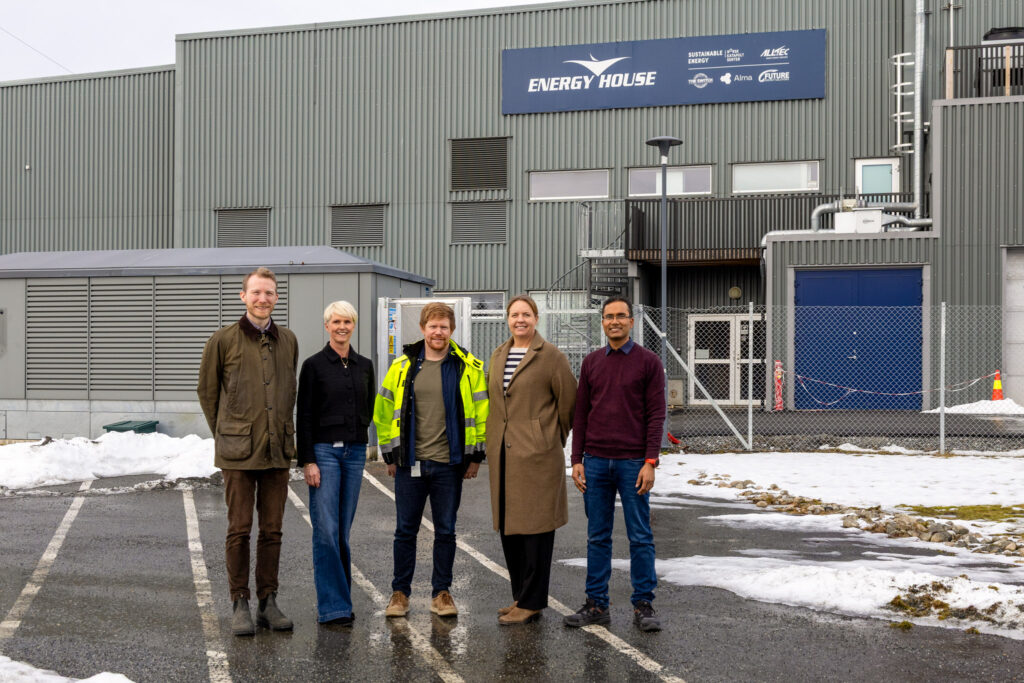
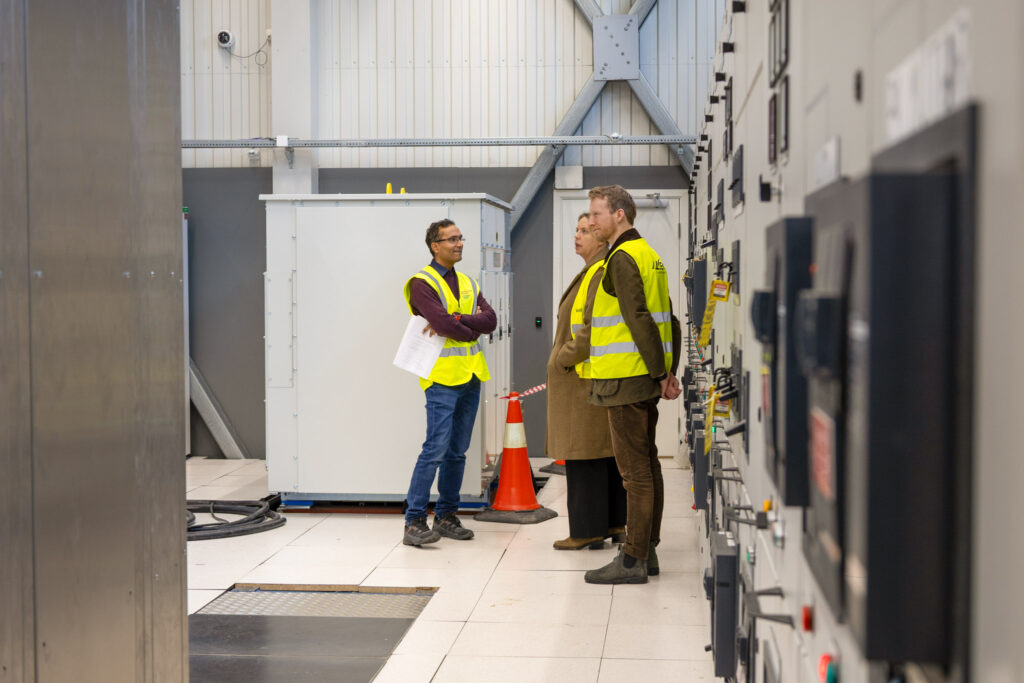
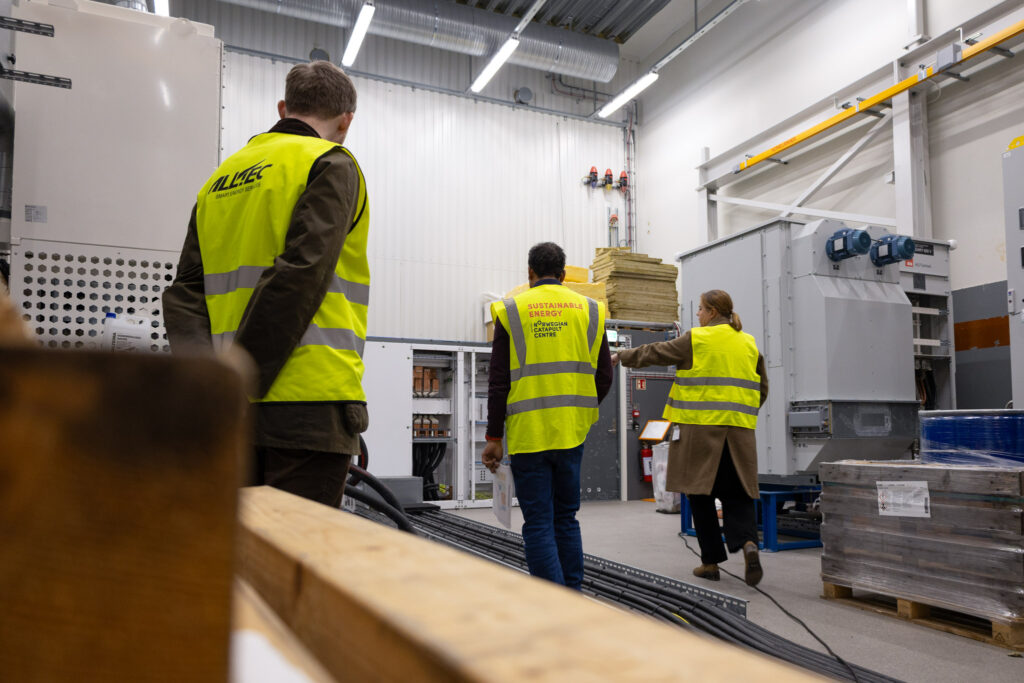
Energy House opened in 2020 as the world’s first full-scale test facilities for new energy solutions. Located in Stord on the west coast of Norway, Energy House has five test cells capable of testing internal combustion engines, novel energy carriers, and electrical machinery.
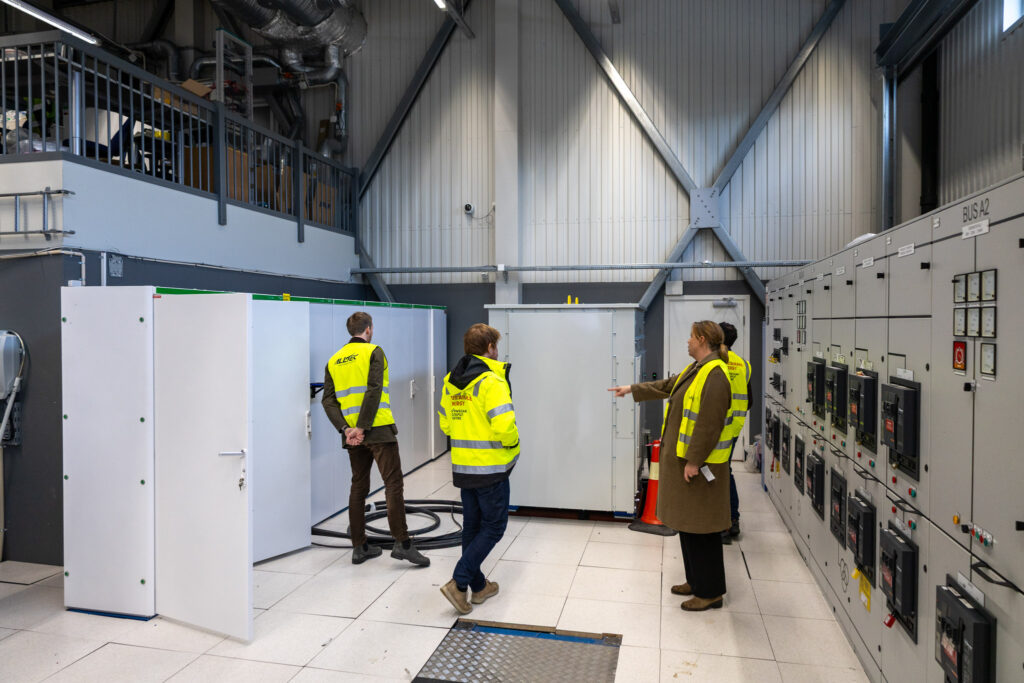
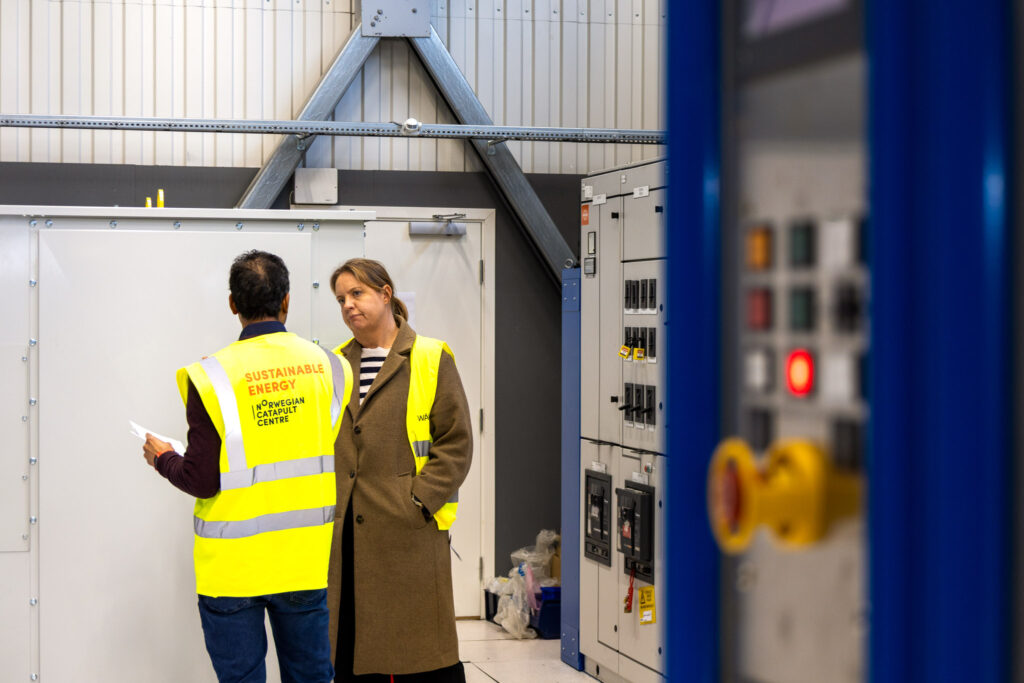
The facilities also include two switchboard rooms, multiple control rooms, and the capability of providing up to 1.5 MW of electricity to the tested STEESMAT system.
A ship on land
“Energy House is a configurable ‘ship on land’, where multiple system configurations can be tested under different testing conditions. By using real maritime components in the switchboards and control rooms, this enables a superior degree of testing realism compared to a typical laboratory setting,” explains Oddgeir R. Heggland, Senior Project Manager at Sustainable Energy Catapult Centre and leader of the test planning.
“In STEESMAT, we will use the space and equipment to test the solid-state transformer, DC secondary grid and smart management and control system combined with a fuel cell and a battery,” he adds.
Eager to explore Energy House? Join us at Energy House Day 2026 on April 9th!
Important project milestone
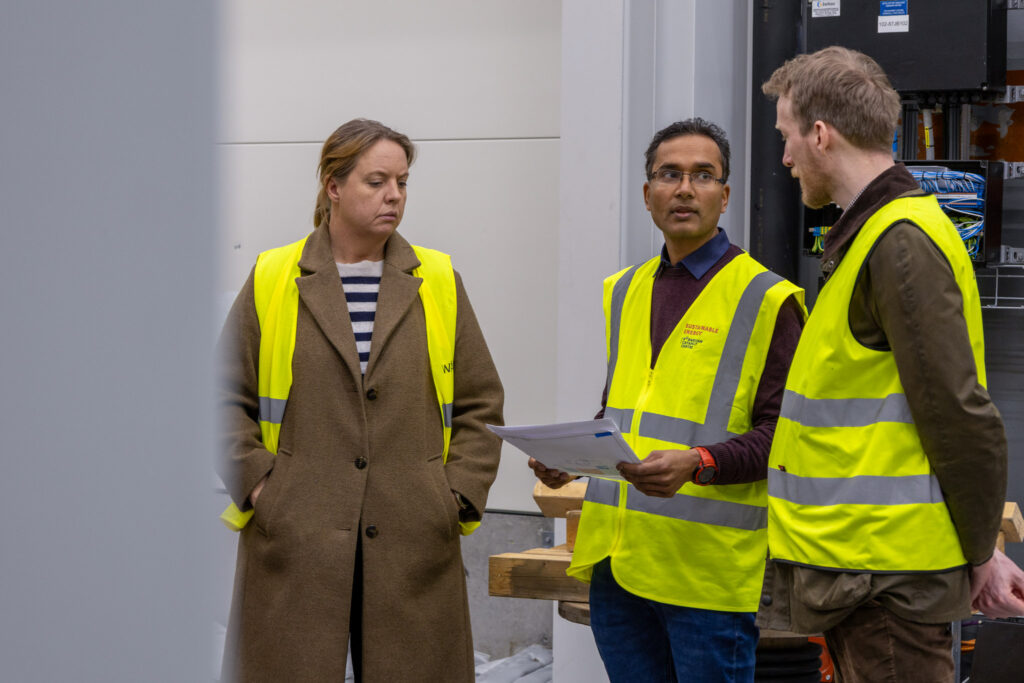
The Energy House test planning kicked off in early 2026 with a project workshop hosted by Sustainable Energy and Wärtsilä. This marked an important step forward on STEESMAT’s path towards demonstrating a modern and sustainable power system for large ships.
“In 2025, the main focus of STEESMAT was defining the system architecture and hardware and software design. With this groundwork mostly completed, the focus has shifted to manufacturing and testing the individual components and planning for the system to be integrated and demonstrated in Energy House,” says Erlend Bertheussen, project manager at Maritime CleanTech and coordinator for STEESMAT.
Paving the way for maritime decarbonisation
Starting in 2027, the following components will be validated and tested in Energy House as parts of the STEESMAT system:
- MVAC/MVDC converter, developed by Danfoss.
- Isolated MVDC/LVDC converter, developed by EATON.
- LVDC/LVDC converter for battery integration, developed by The Switch.
- Isolated LVDC/LVDC converter for fuel cell integration, developed by Danfoss.
- Smart management and control system, developed by NTNU and Wärtsilä.
“Our goal is to demonstrate that this system can deliver significant gains in energy efficiency and lower emissions compared to conventional systems, while maintaining safe and stable operations,” says Vanja Storetvedt, Project Manager R&D at Wärtsilä.