At SMM Hamburg, STEESMAT and ALL-DC-SHIPS brought together stakeholders from across the maritime value-chain to discuss how DC ship systems can move from demonstration to wider commercial use.
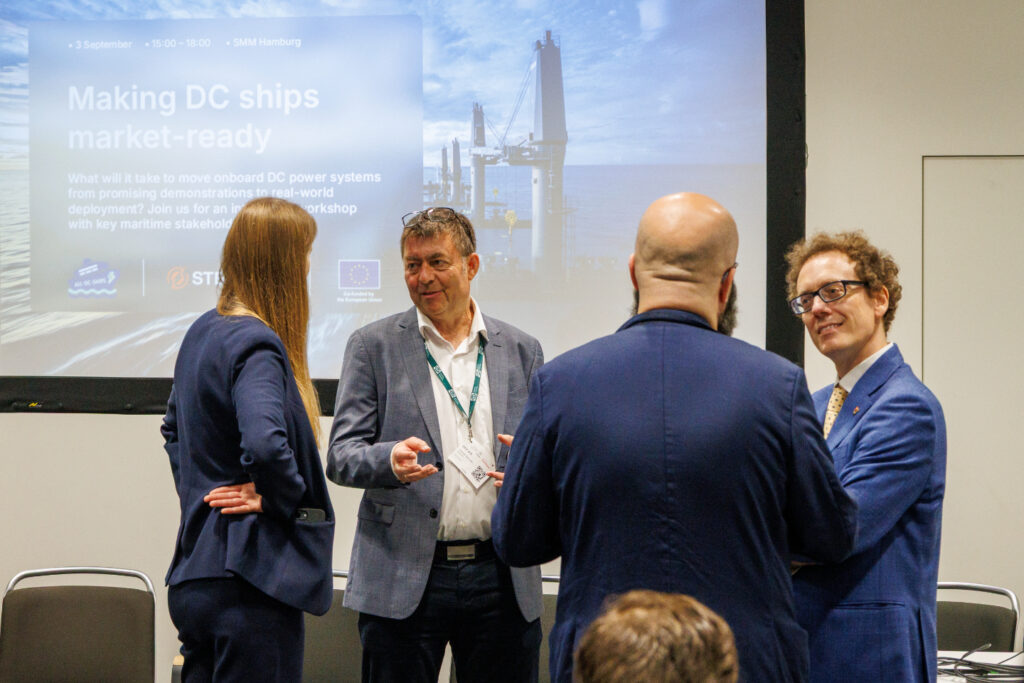
On 3 September 2026, STEESMAT and ALL-DC-SHIPS brought the maritime sector together at SMM Hamburg for the workshop Making DC Ships Market-Ready. The discussion examined how modern onboard power architectures can support Europe’s transition to low- and zero-emission shipping.
By integrating batteries, fuel cells and other clean energy sources with fewer conversion stages, direct-current (DC) systems can reduce energy losses and equipment footprint. Through technology development, full-system demonstration and standardisation, the EU-funded STEESMAT and ALL-DC-SHIPS projects are helping move these solutions towards commercial deployment.
The discussion focused on the benefits of DC and the technical, regulatory and commercial gaps that still limit wider adoption. A strong example was close at hand: On the first day of SMM, REM Pioneer was named Ship of the Year 2026. Its full DC switchboard and battery system was pointed to as proof that the technology is already entering advanced commercial vessels.
Supporting the European maritime transition
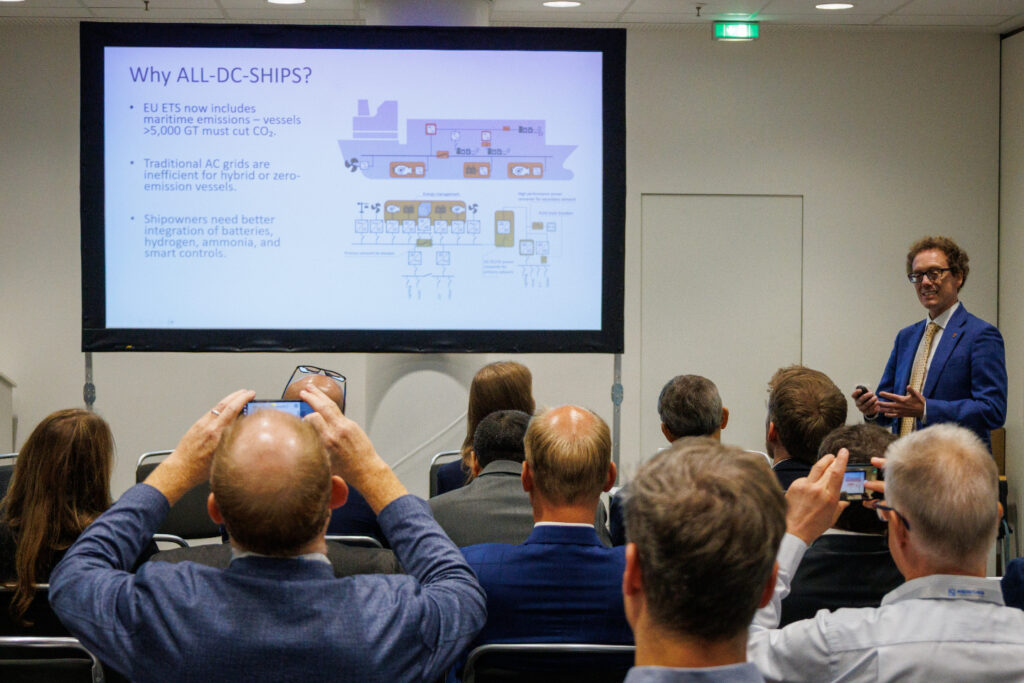
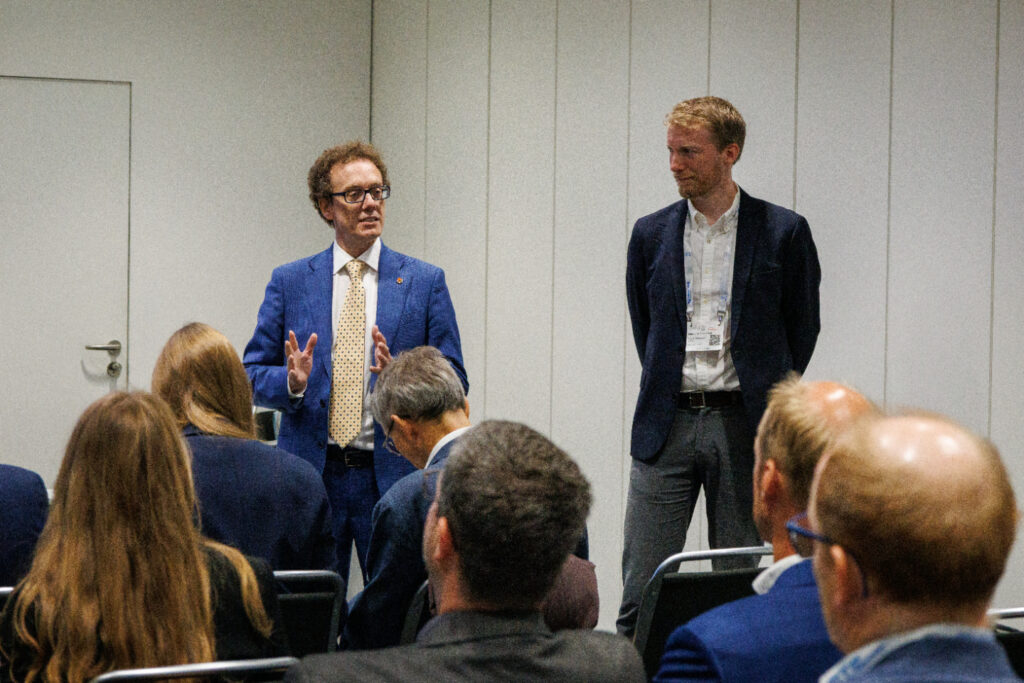
Jaap Gebraad, Secretary General of Waterborne Technology Platform, introduced the wider European context of policy, funding and industry collaboration, before project coordinators Pietro Tricoli (University of Birmingham) and Erlend Bertheussen (Maritime CleanTech) introduced the ALL-DC-SHIPS and STEESMAT projects.
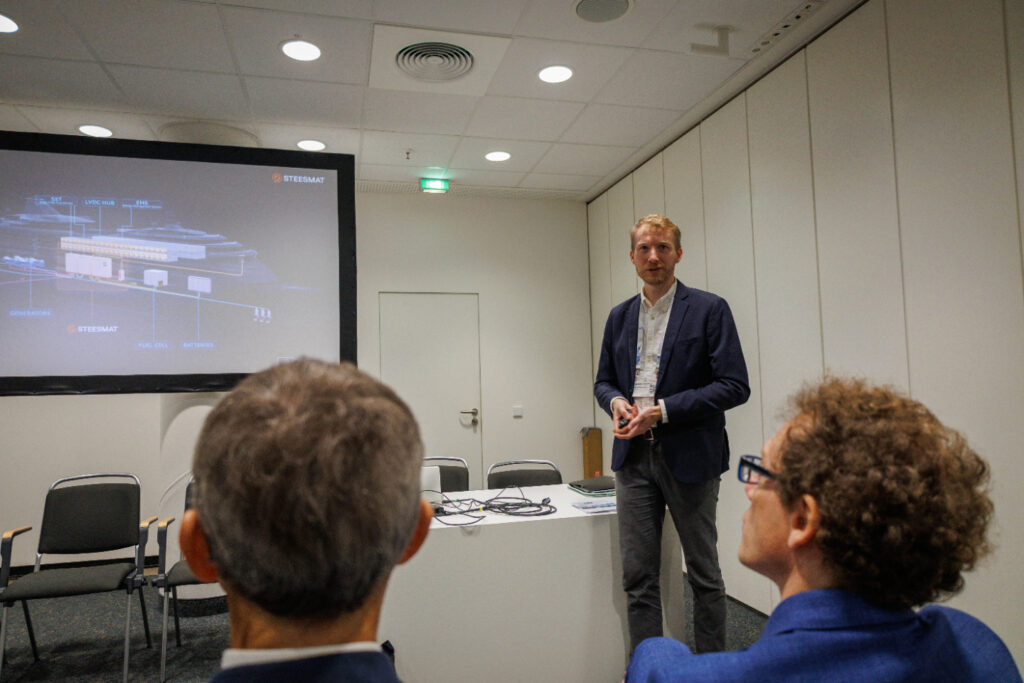
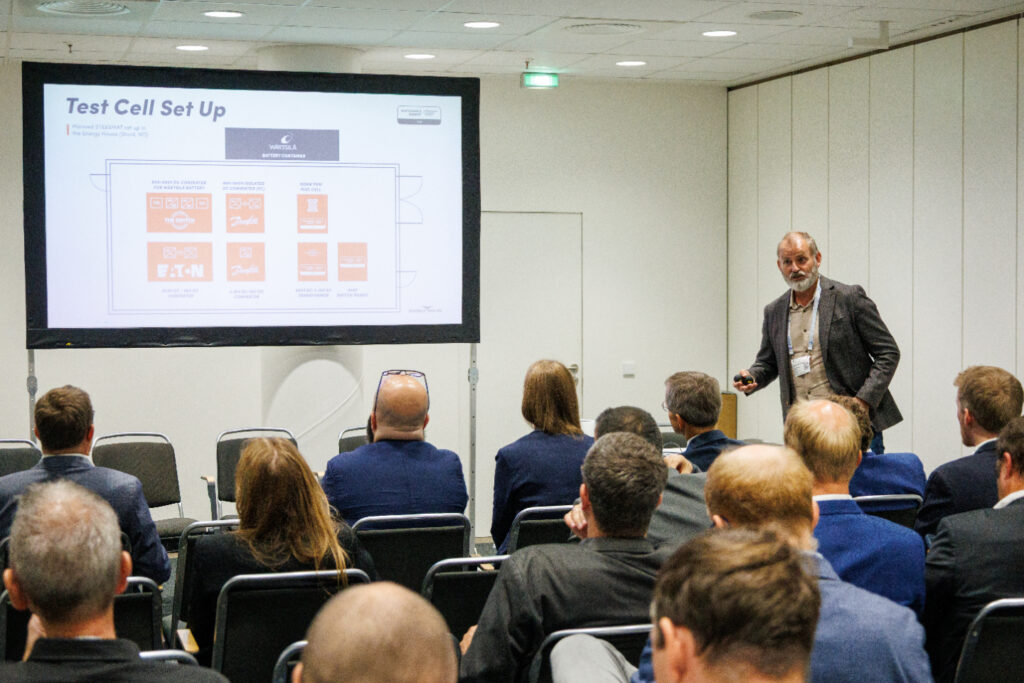
Tore Kallevåg of Sustainable Energy presented STEESMAT’s demonstration plans with emphasis on the Energy House, a test facility he described as a “ship on land”. Its AC and DC grids, marine switchboards, batteries, fuel cells and high-power test capacity will allow the project to test an integrated medium- and low-voltage DC system under realistic conditions before installation on a vessel.
A panel of experts from across the value-chain, representing both project consortia, broadened and deepened the discussion on commercialisation and standardisation.
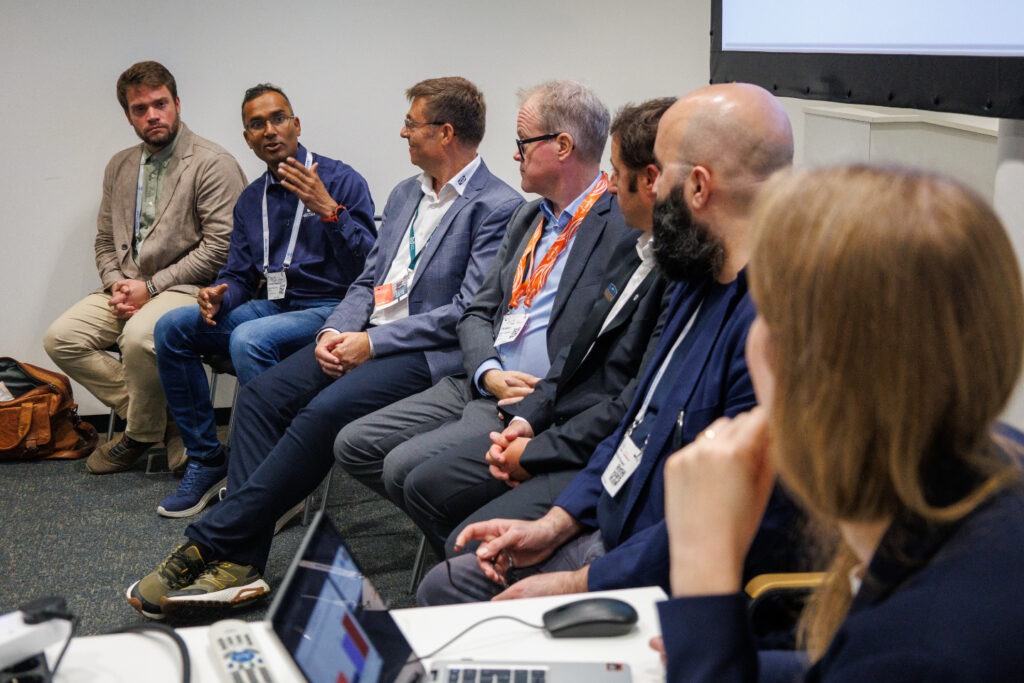
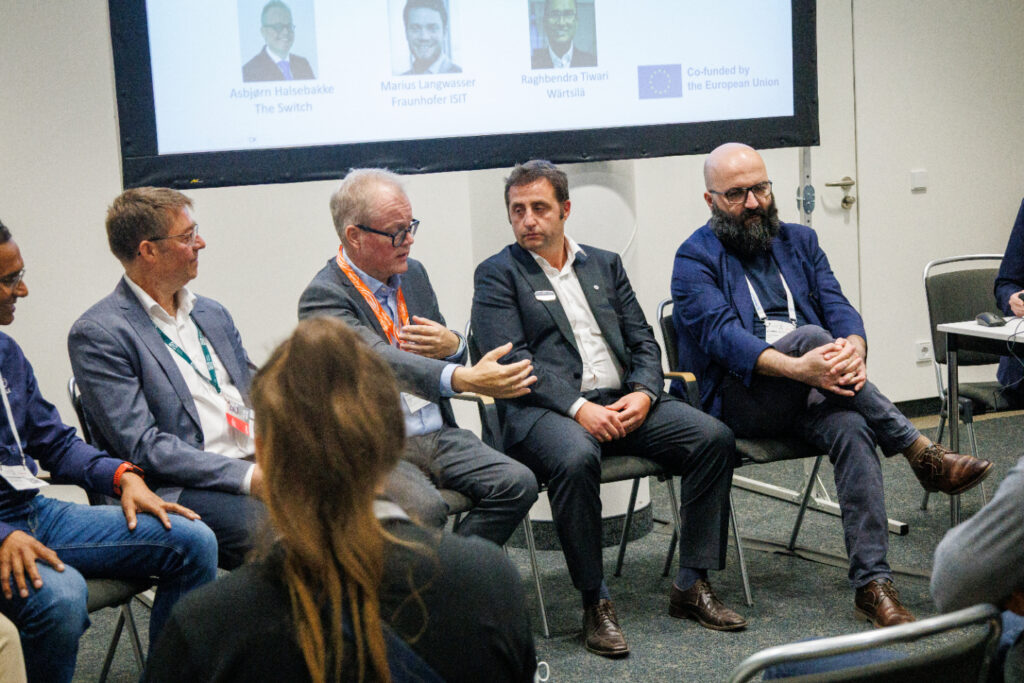
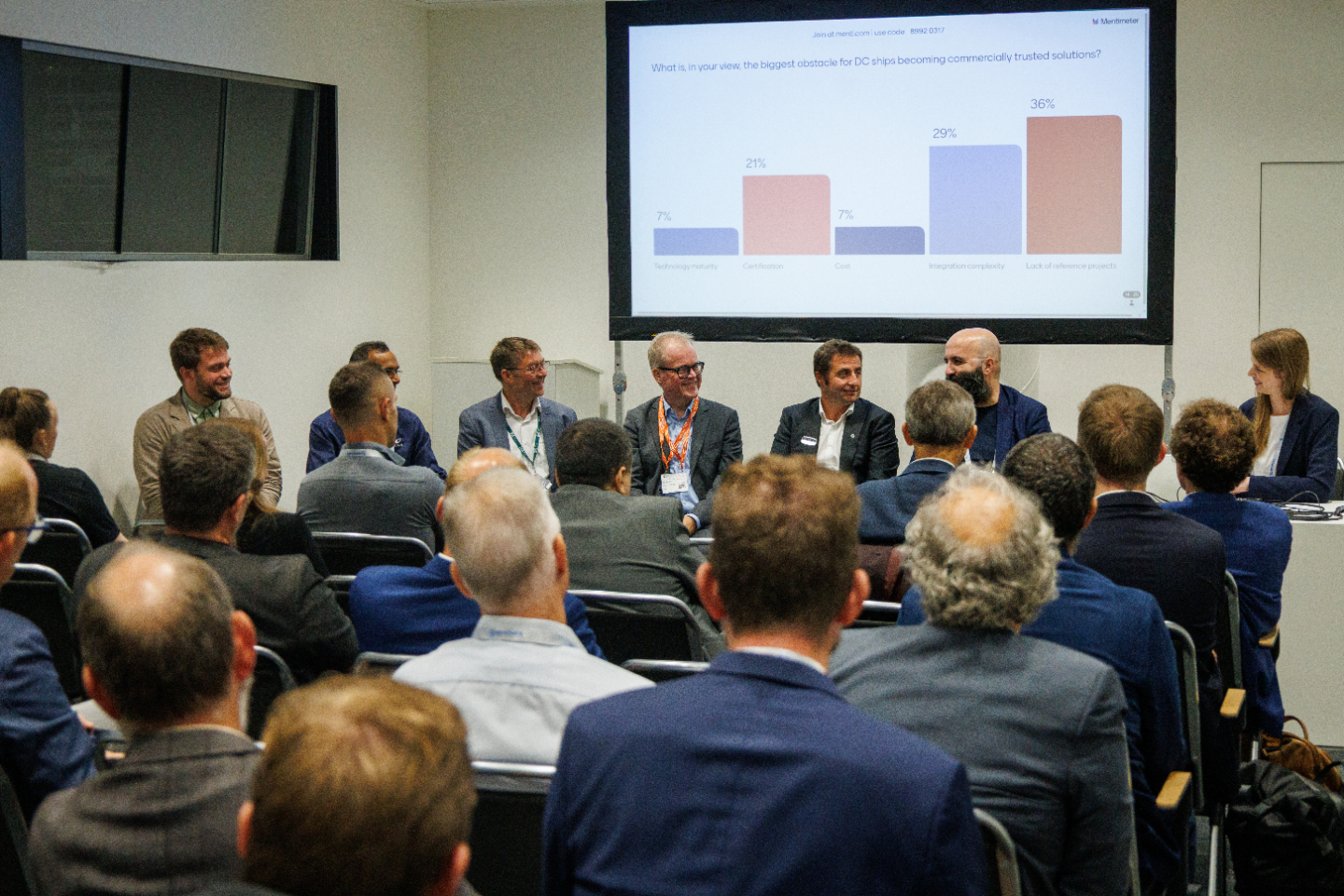
Panellists (left to right): Marius Langwasser, Fraunhofer ISIT; Raghbendra Tiwari, Wärtsilä; Thomas W. Sørensen, DEIF; Asbjørn Halsebakke, The Switch; Patrizio Di Francesco, RINA; Amine Touat, Ponant; Kathrin Renner, ODCA (moderator).
The panel highlighted three main benefits of DC: fewer conversion stages when integrating batteries and fuel cells, easier addition of future energy sources, and variable-speed generator operation. Building further evidence on reliability, resilience, protection and full-system performance to strengthen confidence and support deployment at scale was identified as key to support broader market uptake.
An audience poll reinforced this conclusion. Asked to identify the biggest obstacle to making DC ships commercially trusted, lack of reference project was the most popular answer, followed by integration complexity and certification.
Standards must enable, not slow, innovation
Standardisation was also identified in the discussion as central to scaling. Common requirements for equipment, interfaces and certification can lower costs and build confidence, but the panel warned against prescribing one solution too early. Goal-based rules should protect safety and performance while leaving room for innovation.
While the panellists and participants offered different perspectives with different emphasis on the timing and pace of standardisation and commercialisation, there was broad agreement on the direction of travel. The next step is to prove how complete DC systems perform safely and reliably over time, then turn that evidence into standards, class requirements and repeatable commercial solutions.
The workshop was jointly organised by the EU-funded STEESMAT and ALL-DC-SHIPS projects.